Imagining…
Where Science Meets Creative Writing
Find a story within the topics above
How can we look at fossils and understand what creatures roamed the Earth millions of years ago?
How can we predict the behavior of materials deep within planetary interiors?
How can we reverse humanity’s impact on the global climate?
How can we predict habitats for life on other planets?
Doing impactful, innovative research requires training our brain to imagine the elusive unknown, even when bounded by scientific evidence. Now, more than ever in the history of human civilization, there is a pressing need to exercise our imagination muscles. Writing scientific fiction while accounting for the real science is a powerful way to do just that—to learn what is possible, what is probable, how we can change the future, and what our responsibility is to the future generation of our species.
Most Recent Stories
-

-
Spectrum of Home
A family is facing bureaucratic border control while hoping to arrive at their new home planet.
-

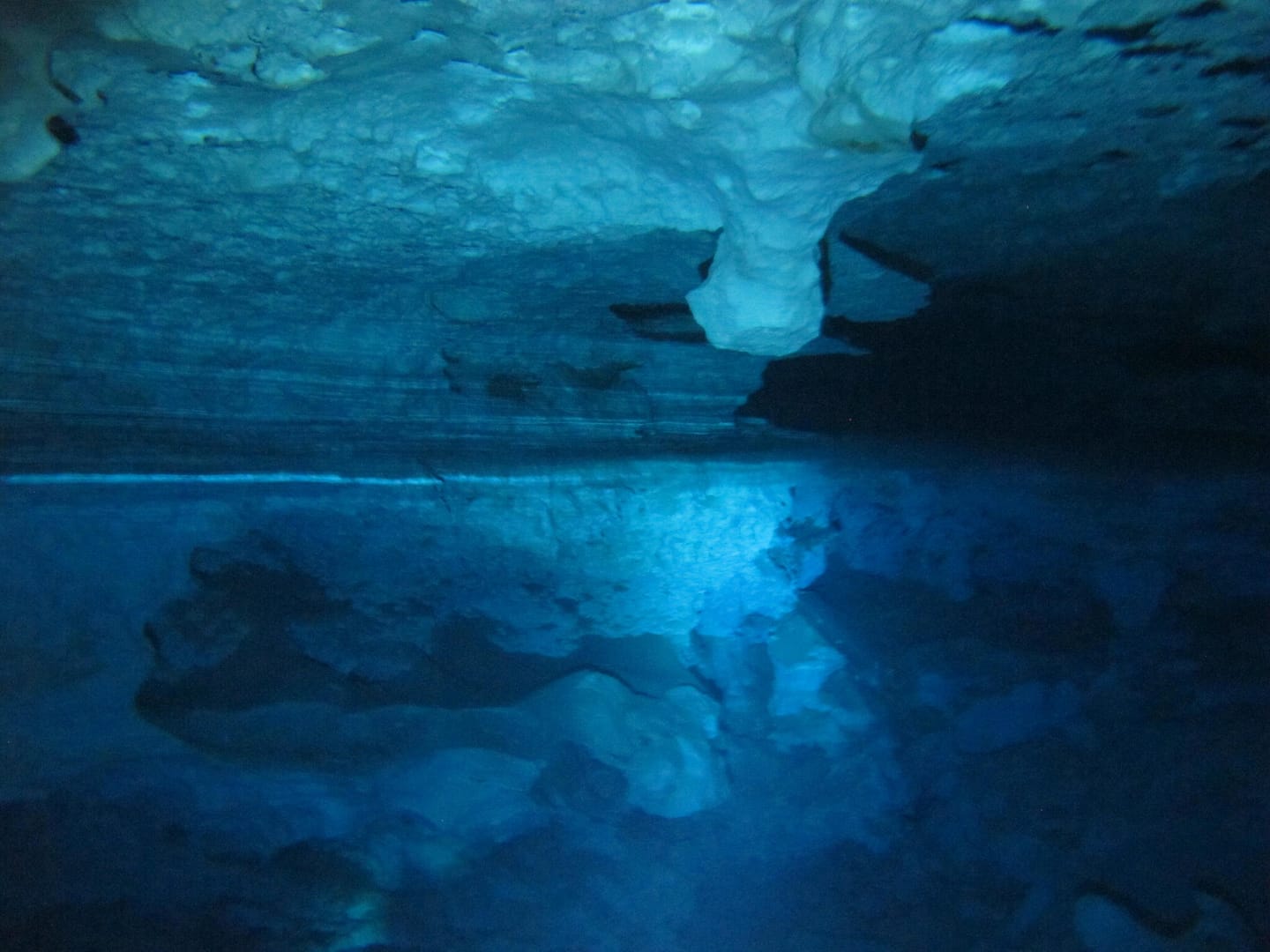
Catch and Release
Inspired by the halocline found in underwater caves in the Yucatán peninsula, an alien fish finds a creature from across the underwater veil.
For Today’s Inspiration
- NASA Astronaut Jonny Kim to Discuss Eight-Month Space Station Mission
NASA astronaut Jonny Kim will recap his recent mission aboard the International Space Station during a news conference at 3:30 p.m. EST Friday, Dec. 19, from the agency’s Johnson Space Center in Houston. Watch the news conference live on NASA’s YouTube channel. Learn how to stream NASA content through a variety of online platforms, including
- NASA’s Webb, Curiosity Named in TIME’s Best Inventions Hall of Fame
Two icons of discovery, NASA’s James Webb Space Telescope and NASA’s Curiosity rover, have earned places in TIME’s “Best Inventions Hall of Fame,” which recognizes the 25 groundbreaking inventions of the past quarter century that have had the most global impact, since TIME began its annual Best Inventions list in 2000. The inventions are celebrated
- Changing Winters Leave Indigenous Alaskans on Thin Ice
Researchers are blending Indigenous Knowledges with climate models to describe shifts in snow and ice.
- Glass Sand Grows Healthy Mangroves
In places with lots of glass waste, sand made from recycled material could be another tool in the coastal restoration toolbox.
- NASA telescope will hunt down ‘city killer’ asteroids
With an infrared eye, NEO Surveyor will target dangerous space rocks glowing in the dark
- Multispecies pangenomes reveal a pervasive influence of population size on structural variation | Science
Structural variants (SVs) are widespread in vertebrate genomes, yet their evolutionary dynamics remain poorly understood. Using 45 long-read de novo genome assemblies and pangenome tools, we analyze SVs among three closely related species of North …
- In This Issue
Proceedings of the National Academy of Sciences, Volume 122, Issue 49, December 2025. <br/>
- Local equations describe unreasonably efficient stochastic algorithms in random K-SAT
Proceedings of the National Academy of Sciences, Volume 122, Issue 49, December 2025. <br/>SignificanceThe difficulties of algorithmic dynamics in highly nonconvex landscapes are central in several research areas, from hard combinatorial optimization to machine learning. However, it is unclear why and how some particular algorithms find …
- Revised estimates of CO2 sources and sinks improve global carbon accounting
Nature, Published online: 12 December 2025; doi:10.1038/d41586-025-03981-xUpdated estimates of the worldwide sources and sinks of anthropogenic carbon dioxide provide a firmer basis for monitoring climate action.
- Science sleuths raise concerns about scores of bioengineering papers
Nature, Published online: 12 December 2025; doi:10.1038/d41586-025-03870-3Prominent bioengineer Ali Khademhosseini has so far corrected more than 40 of the papers in question, but critics say some should have been retracted.